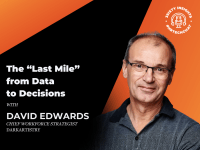
HR leaders are not lacking insight, empathy, or strategic intent. What often limits their influence is not the absence of data, but the absence of shared language with the executives making organizational decisions. Even when HR has the right information, its impact can fall flat if those insights are not framed in terms that connect directly to how leaders think about performance, risk, and value creation. In a recent episode of HRTechChat, I spoke with Maria Scarangella, founder of Marstella and former Vice President of Talent and Enterprise Learning at GEICO. Our conversation explored a challenge many HR leaders intuitively understand but often struggle to address directly: HR is not sidelined because it lacks value. It is sidelined when its insights are framed in HR […]
Human Capital Management
When Organizational Change Becomes Organizational Damage
Over the past several months, I have been sharing a series of posts and videos focused on what I believe is one of the most troubling issues facing organizations today. It is not change itself. Change is necessary. In fact, years ago I wrote extensively about how organizations fail when they cannot keep pace with technology, competition, and shifting market dynamics. That belief has not changed. What has changed is the type of organizational change I am seeing. In many cases, it is so disruptive that it genuinely raises the question of how some businesses manage to stay operational, let alone profitable. One of the earliest themes I raised in this series was the rapidly shrinking tenure of executive leadership. CEOs, CROs, CMOs, and product […]
Community, Purpose, and the Time AI Gives Back
If you had ten more hours a week starting tomorrow, what would you do with them? Why not start now? A Hundred-Year-Old Warning About the Future of Work In 1930, right in the middle of the Great Depression, John Maynard Keynes, often described as the father of Keynesian economics, wrote an essay called Economic Possibilities for Our Grandchildren. It was an odd time to be thinking optimistically about the future. Jobs were disappearing, economies were struggling, and uncertainty was everywhere. Instead of focusing on short-term recovery, Keynes stepped back and asked a much bigger question. What happens to society when technological progress reduces the need for human labor? Keynes believed productivity would keep improving and that, over time, humanity would largely solve what he called the […]
AI Onboarding Is Becoming as Important as Employee Onboarding
AI is on, but the value is inconsistent. Across GTM teams, AI is everywhere. Copilots draft messages, models prioritize accounts, systems suggest next best actions, and forecasts increasingly rely on machine-driven insight. And yet, a familiar refrain keeps surfacing in conversations with operators and executives alike: sometimes it works, sometimes it doesn’t. This is often framed as an AI maturity problem. In practice, it looks more like an organizational readiness problem. After a year of pilots, labs, and real-world experimentation, the models themselves are no longer the primary constraint. They are improving quickly, shaped by widespread usage and constant iteration. The shift we are now seeing is not about whether AI works. It is about whether organizations are prepared to work with it at scale. […]
The Hidden Cost of Organizational Restructuring: A Caution to Executive Leaders
Early in the year, many executive teams confront what feels like an unavoidable reality: organizational restructuring. Budgets reset. Strategies are revisited. New leadership arrives. Pressure mounts to fix what is not working and accelerate progress toward new goals. On the surface, restructuring can feel decisive. It signals action. It creates the impression of transformation. And to be clear, restructuring does have its place. Done thoughtfully, it can unlock efficiencies, clarify accountability, and better align an organization to its market. However, after speaking with hundreds, if not thousands, of businesses across industries, both end users and vendors, I believe there is an uncomfortable truth many executives underestimate. Wide, sweeping organizational restructuring is one of the most disruptive actions a company can take, often with consequences that […]
When Enterprise Social Became the New Press Release Wire
Remember when social media felt creative? When brands experimented in public. When posts sounded human. When the goal was to learn what resonated, not just to avoid what might blow up. Maybe that’s just showing my age, or maybe it’s just having experienced a change in the way brands use social media over the last two decades. A bit of nostalgia if you will. Because enterprise social media did not die. It got professionalized. And in the process, it quietly became something else entirely. Enterprise Social Narrowed Instead of Expanding. It Got Safer. Enterprise social today looks less like a growth channel and more like a modern press release wire: approved messages, distributed at scale, optimized for consistency and safety rather than experimentation. This didn’t happen because social teams forgot how to be creative. It happened because the cost of being […]
Council Guest Post: HR Transformation – Implementing Agile Methodologies within HR for Flexibility and Responsiveness
Transforming Human Resources for the Modern Era Introduction In an era where change is the only constant, traditional Human Resources (HR) practices often struggle to keep pace with the dynamic nature of modern business environments. Agile HR practices offer a transformative approach, enabling HR departments to become more flexible, responsive, and better aligned with organizational needs. Let’s delve into the concept of Agile HR, its benefits, and practical steps for implementation. Understanding Agile HR Agile methodologies, originally rooted in software development, emphasize iterative progress, collaboration, and responsiveness to change. When applied to HR, these principles help create a more adaptive and resilient HR function. Agile HR is characterized by the following core principles: Iterative Processes: Emphasizing continuous improvement through short, iterative cycles. Collaboration: Fostering cross-functional […]
GTM Innovators: Why AI Is Making Average Marketing Easier and Great Marketing Rarer
AI has made it easier than ever to produce content, launch campaigns, and optimize performance at scale. But has it actually made marketing better? In this episode of GTM Innovators, Kyle James sits down with Joey Lai, B2B Marketing Director at Mastercard, for a candid and deeply thoughtful conversation about what’s being lost as AI tools become embedded in everyday marketing work. Drawing on her experience across fast-growing startups and large enterprise organizations, Joey argues that while AI accelerates output, it often erodes the critical thinking, creativity, and human insight that separate average marketing from great marketing. Together, they explore why optimization has become easier, originality has become rarer, and why the next generation of marketers faces a very real risk of outsourcing their thinking along with their tasks. This conversation goes beyond AI hype to examine: […]
#HRTechChat: The Economics of HR – Speaking the Language of Business with Maria Scarangella
In this episode of #HRTechChat, Nicole Roberts is joined by Maria Scarangella to tackle one of the most persistent challenges facing HR today: proving business value in a climate defined by cost pressure, efficiency mandates, and heightened executive scrutiny. Drawing on her 37-year career at GEICO—including leadership of a $2.5B P&L—and her current work building Marstella, Maria explains why HR risks losing its strategic seat when it speaks only in HR metrics instead of business outcomes. Together, they explore how quantifying the true cost of hiring, onboarding, training, and turnover can fundamentally change executive decision-making—from smarter workforce planning to more targeted investments in technology and development. Maria outlines why “a lot” is not a number, how lifecycle cost visibility creates accountability across leaders, and why […]
Monthly Research Recap | December 2025
Recent Research Research Agenda: Changing Workplace Dynamics & The Future of Work in 2026 This 2026 research agenda from Dylan Teggart examines how accelerating AI adoption, shifting labor market dynamics, declining employee engagement, and mounting compliance complexity are fundamentally reshaping the world of work. As employers regain leverage and HR technology enters a period of consolidation and commoditization, the focus of this research is on separating signal from noise—understanding what is truly driving measurable workforce outcomes versus what remains aspirational rhetoric. Through in-depth analysis of real organizational experiences, technology decisions, and execution strategies across the employee lifecycle, this agenda aims to equip HR and business leaders with practical, data-driven insights to turn modern HR, AI, and workforce management investments into tangible results in 2026 and […]
Research Agenda: Changing Workplace Dynamics & The Future of Work in 2026
“The old system is gone. The new one has not yet formed,” said Canadian Prime Minister Mark Carney at the 2025 ASEAN Summit. While this is truer than ever for geopolitics, it’s also true for how we work. For the second (or even third) time this decade, the concept of “work” is changing, and AI is a big reason for it. Layoffs have begun at major tech companies driven by automation and a shift towards AI-driven work models, and within HR technology, there’s been significant consolidation and acquisition as vendors make investments that only the big players can handle. Offerings, messaging, pricing, and AI use are in flux, and we’ve yet to see how things will land. My research aims to help HR leaders make […]
#HRTechChat: Jeff Smith of 15Five on Building Better Managers in the Age of AI
In this episode of #HRTechChat, Nicole Roberts sits down with Jeff Smith, COO of 15Five, to unpack what it really takes to build better managers in an era of AI, constant change, and overflowing HR to-do lists. A psychologist by training with deep R&D and product experience, Jeff brings a rare lens on how organizations can redesign systems, expectations, and technology to truly support people leaders—not just measure them. They dig into the mounting pressure on HR and managers, the shift from “HR owns all people issues” to shared accountability, and why management has to be treated as a daily practice, not a one-time promotion. Jeff explains how tools like 15Five and Kona AI can turn everyday one-on-ones into continuous performance data, simplify review cycles, […]
Analyst Insight: What Makes a Certified Great Place To Work Company
Many careers pages today seem to carry a badge: “Great Place To Work Certified.” But to the job market, what does it typically signal, and where does it fall short? As an analyst engaging with HR leaders, employees, and HR tech vendors, it seems like Great Place To Work certification is seen less as the sole indicator of a “good company” and more as part of a body of evidence that includes retention statistics, internal mobility metrics, cultural trends, and employee feedback initiatives. Taking a Closer Look Great Place To Work (GPTW) is a workplace culture consultancy that has spent over 30 years researching employee experience and positioning itself as a global authority on workplace culture. GPTW says more than 10,000 companies across 60 countries […]
Video: Human in the Loop or Just a Checkbox? Rethinking AI in HR and Support
In today’s video, Nicholas Biron break down a growing problem in both customer service and employee experience: AI is being used as a barrier, not an enabler. Vendors love to talk about “human in the loop,” but in reality, that human is usually sitting behind the scenes, not where customers and employees actually interact. The result? Frustration, loss of empathy, and an experience that feels increasingly robotic. He shares real example; from trying to reach a live agent at major providers, to a recent doctor’s visit where AI-driven prompts replaced real human connection, to how AI is affecting performance management. But it’s not all doom and gloom. AI can dramatically improve experience when used correctly. Payroll support is a great example, where AI agents can […]
Council Guest Post: HR Transformation: Effective Communication Strategies
Building Trust and Engagement through transparent and effective communication Introduction The landscape of Human Resources (HR) is continuously evolving, driven by technological advancements, globalization, and changing workforce dynamics. As organizations seek to stay competitive, HR transformation has become a vital process. However, any transformation journey can be fraught with challenges, and one of the most critical aspects of navigating these challenges is ensuring transparent and effective communication. Effective communication strategies not only facilitate the smooth implementation of changes but also build trust and engagement among employees. The Importance of Communication in HR Transformation Initiative Communication is the lifeblood of any organizational change. In the context of HR transformation, it ensures that all stakeholders are informed, engaged, and aligned with the transformation goals. Transparent communication helps […]
Video: Are Vendors Losing by Overloading on AI Features?
In this video, Nicholas Biron discusses a growing trend in vendor presentations: overloading audiences with AI features instead of focusing on solving real business problems. He shares observations from virtual analyst updates and emphasizes that line-of-business executives often lack advanced AI sophistication. Vendors are urged to differentiate by addressing customer challenges and practical outcomes rather than feature dumps.
Video: Executive Turnover Is Disrupting Business – Here’s How to Keep Momentum
In this video Nicholas Biron explores the rising challenge of short executive tenures, now averaging around 18 months, and how this trend disrupts organizational strategy, marketing plans, and product execution. Drawing on research and firsthand observations, Nicholas emphasizes the importance of leadership retention and institutional knowledge for business success. He cautions that frequent executive changes can stall momentum, create strategic uncertainty, and ultimately hinder organizational growth.
Monthly Research Recap | November 2025
Recent Research: Research Agenda: 2026 Go-to-Market B2B This 2026 Go-to-Market B2B Research Agenda explores how efficiency, authenticity, and AI collaboration are reshaping modern revenue organizations. Building on insights from 2025, this year’s focus highlights five major shifts: the move toward efficiency as the dominant GTM operating model, the growing importance of human-centered advocacy supported by AI, the evolution of precision demand creation, the rise of Customer Success as a revenue engine, and the transformation of search and discovery driven by generative AI. Together, these themes capture the key questions and opportunities facing GTM leaders in 2026 and invite continued community input to refine and validate their real-world impact. Market Alert: Dayforce Expands Its Single AI Platform to Strengthen Enterprise HCM Capabilities Dayforce, Inc. is strengthening […]
Analyst Insight: California Labor Laws and Compliance – Burden, Benchmark, or Competitive Advantage?
In more than one phone call with customers, vendors, or other analysts in the HR technology industry, I’ve heard the claim that it’s hard to do business in the state of California. According to these conversations, the state is riddled with unnecessary compliance, too many hoops to jump through, a mountain of litigation risk, and constant changes to the rules. Business groups frequently cite labor, wage, and climate regulations as part of a broader, burdensome business environment. So, I decided to take a look. Is the situation in California really as out of control as people claim? Fact vs Fiction To start, there is a significant kernel of truth behind these claims, especially when compared to the rest of the United States. California’s 2025 statewide […]
California Labor Laws and Compliance: Burden, Benchmark, or Competitive Advantage? | Perception, Future Trends, and the Role of HR Tech
Part 3 of 3: Perception, Future Trends, and the Role of HR Tech In this final installment, we shift from diagnosis to implications. After situating California within the US and global context, we’ll explore why the “impossible to operate” narrative persists and how HR technology can transform high-compliance environments into lasting advantages. High wages, aggressive enforcement, litigation exposure, and complex rules do create real operational friction, and business-oriented groups consistently highlight these burdens. But in practice, part of this also stems less from irrational rules but more from the collision of California’s modern workforce standards with outdated, under-resourced HR teams and fragmented systems. For many companies, these laws and their internal resources are like oil and water. Multi-jurisdiction employers face friction, especially if their HR […]