Over the past several months, I have been sharing a series of posts and videos focused on what I believe is one of the most troubling issues facing organizations today. It is not change itself. Change is necessary. In fact, years ago I wrote extensively about how organizations fail when they cannot keep pace with technology, competition, and shifting market dynamics. That belief has not changed.
What has changed is the type of organizational change I am seeing. In many cases, it is so disruptive that it genuinely raises the question of how some businesses manage to stay operational, let alone profitable.
One of the earliest themes I raised in this series was the rapidly shrinking tenure of executive leadership. CEOs, CROs, CMOs, and product leaders are cycling through organizations at an alarming rate. Every new executive arrives with the understandable desire to establish credibility, define a new vision, and bring in trusted people. The result is often a full reset of teams, priorities, and strategy. That reset might happen once. Increasingly, it is happening repeatedly.
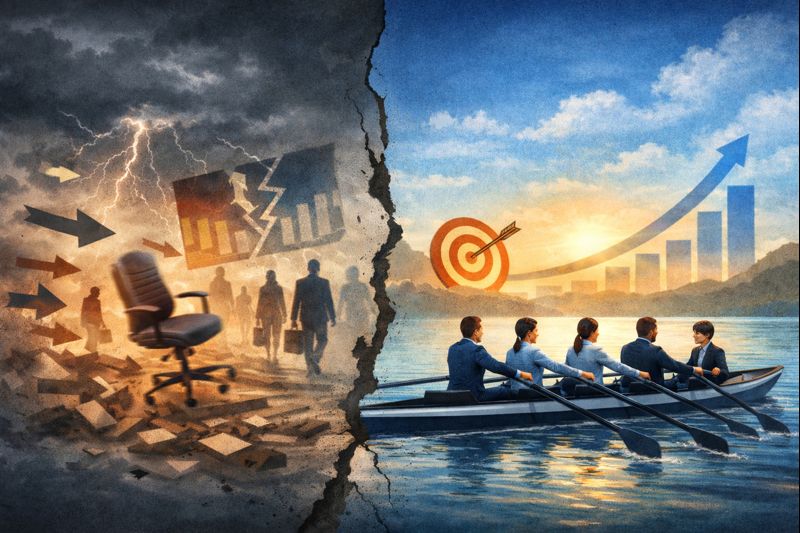
In parallel, I have observed organizations that may not be changing executives quite as frequently, but are making dramatic and abrupt shifts to their go to market strategy. I have described this before as driving down the highway at seventy miles per hour and violently jerking the steering wheel in a new direction. Even if the destination is theoretically better, the damage caused by that move can be catastrophic.
Individually, these behaviors are harmful. Combined, they are deadly.
When you look at why certain software, technology, and services organizations consistently outperform their peers, the pattern is remarkably clear. Successful companies have a well established plan. They move forward with intention. They make small, incremental adjustments based on market feedback. Most importantly, they retain leadership long enough for strategy to take root and compound.
On the other end of the spectrum are organizations that cannot seem to plant their feet. Their strategy is always changing. Their organizational footprint is constantly in flux. Leadership teams are reshuffled again and again. From the outside, it often appears that they are grasping for direction rather than executing toward one.
In some cases, the only reason these companies remain afloat is access to capital. They burn through a bankroll while searching for traction, then either run out of funding or convince someone to extend it further. What they rarely do is create the stability required to win business and grow sustainably.
I have seen this play out repeatedly, including with organizations we have worked with over multiple years. In one example, a company brought in a new CEO who made a significant directional change. It was the right move. The strategy was sound, and the organization began aligning around it. New leadership was hired, including marketing, and progress followed.
Within months, the head of marketing was gone. A replacement arrived and began redefining the go to market approach. Less than eighteen months later, the CEO departed. A new CEO stepped in, brought their own vision, replaced leadership again, and reset priorities once more. Shortly after, yet another marketing leader was introduced.
At that point, it becomes nearly impossible to execute. You cannot radically change direction, install new leadership to guide that change, then repeatedly replace the very people responsible for making it real. That is not strategy. That is churn.
This level of instability creates uncertainty throughout the organization. Employees begin to wonder whether they will survive the next leadership change. Customers feel the inconsistency. Execution slows as teams wait for direction that may soon be reversed. Alignment never fully forms because no one believes it will last.
This is where boards and executive leadership must take a hard look in the mirror. Too often, boards respond to pressure by forcing leadership changes without recognizing that constant turnover is itself a primary driver of underperformance. Stability at the top is not a luxury. It is a prerequisite for success.
Organizations need a long term leadership perspective. CEOs, heads of marketing, sales, and product must be given the runway to execute, ideally over several years. That stability allows culture to form, strategy to mature, and teams to move in unison. Alongside that, companies must commit to a clear marketing and go to market plan, adjusting it thoughtfully over time rather than making disruptive, sweeping changes.
Many struggling organizations are quick to blame external factors. The economy. AI. Talent shortages. Remote work. While these forces are real, they are often not the root cause. More often, the issue lies internally. Leadership turnover. Strategic whiplash. Waiting for perfect plans instead of executing imperfectly and learning.
The companies that are succeeding are not standing still. They are executing now. They are aligned. Everyone knows the direction. Adjustments are made continuously, but without panic. The boat is moving forward because everyone is rowing the same way.
If there is one message I hope leaders and board members take away, it is this. Stability enables execution. Execution enables growth. Without stability at the top, no amount of strategy, technology, or capital will compensate.
I welcome the conversation. If you are part of a stable organization seeing sustained success, I would love to understand what you are doing differently. If you are navigating instability and struggling to gain traction, the same applies. These stories matter, and sharing them is how organizations learn to do better.
At 3Sixty Insights, this is exactly the type of challenge we help advisory clients work through. Creating alignment, building durable strategy, and getting organizations rowing in the same direction is not easy. But it is the difference between motion and progress.