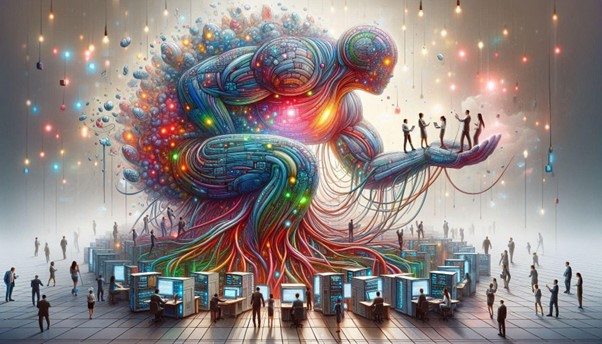
How to keep HR systems healthy and happy
Introduction
One of my friends recently told me that in Japanese culture, people believe machines have souls. That clicked and strengthened my gut feeling around HR systems.
When speaking to HR executive leaders, I always jokingly referred to our HRIS system as a beast and how constantly we need to feed it.
If we think of our HR system, such as SuccessFactors, as a living organism, we might have a better understanding of why it needs constant care and feeding. Just like any living thing, our HR system has a lifecycle, a metabolism, a nervous system, and a personality. From my personal experience, just like any living thing, an HR system can get sick, tired, or unhappy if we neglect it.
I have learned this the hard way over the years by implementing and sustaining various HR Systems. I would like to explore on how to keep our HR system healthy and happy, and how to avoid the common pitfalls that can harm its performance and well-being.
The Lifecycle of Our HR System
Our HR system has a life cycle that consists of four stages: implementation, adoption, optimization, and innovation. Each stage has its own challenges and opportunities and requires different types of care and feeding. Let’s look at each stage in more detail.
- Implementation: This is the stage where we install and configure our HR system. We have migrated our data from our legacy systems. This stage requires a lot of planning, testing, and training, as well as close collaboration with our vendor and stakeholders. We need to feed our HR system with accurate and consistent data, and make sure it is aligned with our business processes and business goals. We also need to care by ensuring it is secure, compliant, and scalable.
- Adoption: This is the stage where we launch our HR system to our end users and monitor their usage and feedback. In the traditional way of doing things, this stage requires a lot of communication, education, and support, as well as regular evaluation and measurement. We need to feed our HR system with user feedback, and make sure it is user-friendly, intuitive, and engaging. We also need to care for our HR system by addressing any issues, bugs, or gaps that may arise, and by providing ongoing training and updates.
- Optimization: This is the stage where we fine-tune and enhance our HR system and leverage its full potential. This stage requires a lot of analysis, innovation, and improvement, as well as continuous alignment and integration. We need to feed our HR system with best practices, and make sure it is efficient, effective, and agile. We also need to care for our HR system by optimizing its performance, functionality, and usability, and by integrating it with other systems and platforms.
- Innovation: This is the stage where we transform and future-proof our HR system and create a competitive advantage. This stage requires a lot of vision, creativity, and experimentation, as well as strategic alignment and differentiation. We need to feed our HR system with new ideas, and make sure it is adaptable, flexible, and responsive. We also need to care for our HR system by embracing change, exploring new possibilities, and creating new value.
The Metabolism of Our HR System
Our HR system has a metabolism that consists of two processes: data ingestion and data digestion. Data ingestion is the process of collecting, storing, and managing the data that our HR system needs to function. Data digestion is the process of analysing, reporting, and visualizing the data that our HR system produces to generate insights and actions. Both processes are vital for our HR system’s health and happiness and require different types of care and feeding. Let’s look at each process in more detail.
- Data ingestion: This is the process of feeding our HR system with the data it needs to function. This includes data from our internal sources, such as our payroll, benefits, and other systems, as well as data from our external sources, such as industry benchmarks, market trends, etc. We need to feed our HR system with high-quality, relevant, and timely data, and make sure it is consistent, accurate, and complete. We also need to care for our HR system by ensuring it has enough storage space, bandwidth, and security to handle the data volume, velocity, and variety.
- Data digestion: This is the process of feeding our HR system with the data it produces to generate insights and actions. This includes data from our dashboards, reports, and analytics, as well as data from artificial intelligence, machine learning, and predictive models. We need to feed our HR system with meaningful, actionable, and impactful data, and make sure it is clear, concise, and compelling. We also need to care for our HR system by ensuring it has enough processing power to handle the data complexity, and have stable infrastructure with appropriate security in place.
The Nervous System of Our HR System
This came to me as a surprise; I hope it is not a surprise to you. I learned it over the years, of course, in a hard way.
Our HR system has a nervous system that consists of two components: user interface and user experience. User interface is the way our HR system looks and feels, and how it interacts with our end users. User experience is the way our HR system works and behaves, and how it meets our end users’ needs and expectations. Both components are crucial for our HR system’s health and happiness and require different types of care and feeding. Let’s look at each component in more detail.
- User interface: This is the way our HR system looks and feels, and how it interacts with our end users. This includes the design, layout, and functionality of our HR system, as well as the colors, fonts, and icons that we use. We need to feed our HR system with a user interface that is attractive, consistent, and intuitive, and make sure it is easy to navigate, access, and use. We also need to care for our HR system by ensuring it is responsive, adaptive, and accessible to different devices, browsers, and screen sizes.
- User experience: This is the way our HR system works and behaves, and how it meets our end users’ needs and expectations. This includes the performance, reliability, and usability of our HR system, as well as the satisfaction, engagement, and loyalty that it generates. We need to feed our HR system with a user experience that is fast, smooth, and seamless, and make sure it is relevant, personalized, and delightful. We also need to care for our HR system by ensuring it is stable, secure, and scalable to different scenarios, situations, and challenges.
The Personality of Our HR System
Drumroll, please! Our HR system has a personality that consists of two aspects: culture and brand. Culture is the way our HR system reflects and influences our organizational values, beliefs, and behaviours. Brand is the way our HR system represents and differentiates our organizational identity, image, and reputation. Both aspects are essential for our HR system’s health and happiness and require different types of care and feeding. Let’s look at each aspect in more detail.
- Culture: This is the way our HR system reflects and influences our organizational values, beliefs, and behaviours. This includes the tone, voice, and style of our HR system, as well as the messages, stories, and emotions that it conveys around chaos or structure around HR business processes. We need to feed our HR system with a culture that is aligned, consistent, and authentic, and make sure it is supportive, collaborative, and inclusive to develop and support our people. We also need to care for our HR system by ensuring it is respectful, ethical, and responsible to our stakeholders, society, and environment.
- Brand: This is the way our HR system represents and differentiates our organizational identity, image, and reputation. This includes the name, logo, and slogan of our HR system, as well as the benefits, features, and values that it offers. How would you feel if your HRIS system is called by the product name, such as SuccessFactors, vs if you participate in naming it. Then it is personal, right? We need to feed our HR system with a brand that is distinctive, recognizable, and memorable, and make sure it is appealing, credible, and trustworthy.
Let’s Do Everything to Make Our HR System Healthy and Happy
Our HR system is a living organism that needs constant care and feeding to achieve the operational efficiencies, user experience, data integrity and analytics that we desire. By understanding and applying the analogy of a living organism, we can better manage and maintain our HR system and avoid the common pitfalls that can harm its performance and well-being. Remember, our HR system is not just a tool, it is a partner, and it deserves our attention, care, respect, and love. If we keep this in mind, then we can also leverage the full potential of our HR system and create a competitive advantage for the organization.
Let’s create a happy workplace with happy technology!