Every now and then a book comes along that challenges the status quo. A book that has the capacity to help us look at what we are doing today and see that we can do better. The Five Talents that Really Matter is such a book. Barry Conchie and Sarah Dalton, through scientific research, have identified the talents that really matter. They cut through all the noise surrounding what leaders do and how the absolute best achieve success.
Talents are different from what we see in the market today—they are not a product of competency models or building lists of experiences or capabilities—they are not the output of 360 assessments from leaders or peers that can often suggest room for improvement. “Talents cannot be learned or taught. They are the natural characteristics we are all born with.”
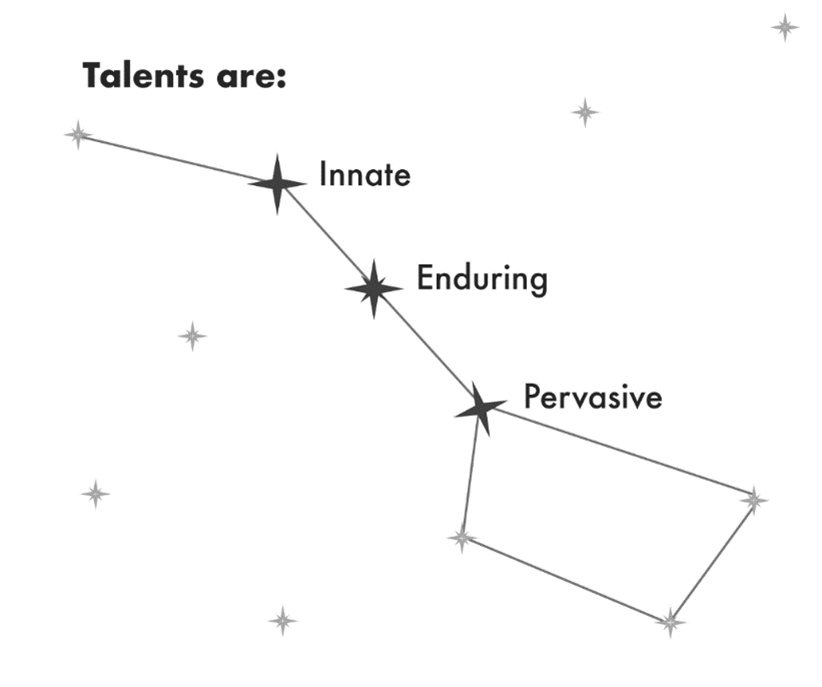
Talents are a part of who we are and how we think (innate), consistent over time and resistant to change (enduring), and present in our daily work and in our lives (pervasive).
 So, what are the Talents that really matter?
- Setting Direction
- Harnessing Energy
- Exerting Pressure
- Increasing Connectivity
- Controlling Traffic
In this first podcast in the 5 Talents that Really Matter Series, we meet Barry and Sarah, learn about how they arrived at the five talents, and receive an overview of how the current way we evaluate and hire talent is flawed, and what can be done moving forward to select and develop talent with a high probability of success.
At a time when several studies have shown between 50-70% of new CEOs fail within the first 18 months (CEB), and 50% of externally hired executives and 35% of internally promoted leaders fall short of performance expectations (DDI), isn’t it time for a new approach?
Learn more about the book:
Five Talents Pre-Sales | Conchie Associates
Our #HRTechChat Series is also available as a podcast on the following platforms:
- Apple iTunes: https://podcasts.apple.com/us/podcast/3sixty-insights/id1555291436?itsct=podcast_box&itscg=30200
- Spotify: https://open.spotify.com/show/7hXSgrFWXwvJqPbnKunztv
- SoundCloud: https://soundcloud.com/user-965220588
- YouTube: https://www.youtube.com/channel/UC6aDtrRPYoCIrnkeOYZRpAQ/
- iHeartRadio: https://www.iheart.com/podcast/269-3sixty-insights-78293678/
- Amazon Music & Audible: https://music.amazon.com/podcasts/7e7d809b-cb6c-4160-bacf-d0bb90e22f7c
- Pandora: https://www.pandora.com/podcast/3sixty-insights/PC:1000613511
- PlayerFM: https://player.fm/series/3sixty-insights
- Instagram: https://www.instagram.com/3sixtyinsights/
- Pocket Casts: https://pca.st/iaopd0r7
- blubrry: https://blubrry.com/3sixtyinsights/
- Castbox: https://castbox.fm/channel/id4113025
- ivoox: https://www.ivoox.com/en/perfil-3sixty-insights_a8_listener_25914379_1.html
- Podchaser: https://www.podchaser.com/podcasts/3sixty-insights-1718242
- Pocket Cast: https://pca.st/iaopd0r7
- Deezer: https://www.deezer.com/us/show/3029712
- Listen Notes: https://www.listennotes.com/podcasts/3sixty-insights-3sixty-insights-DgeU6AW42hn/
- TUNE IN: https://tunein.com/podcasts/Business–Economics-Podcasts/3Sixty-Insights-TechChat-p1529087/
- PodBean: https://www.podbean.com/podcast-detail/9nugf-1e0a27/3Sixty-Insights-Podcast
- Audacy: https://www.audacy.com/podcast/3sixty-insights-hrtechchat-1ccab
- podimo: https://podimo.com/dk/shows/3sixty-insights
- rephonic: https://rephonic.com/podcasts/3sixty-insights
See a service missing that you use? Let our team know by emailing research@3SixtyInsights.com.
Transcript:
Pamela Stroko 00:00
Hi everyone, and welcome to 3Sixty Insights, #HRTechChat. I’m so excited about our guest today, and we have with us the two authors of the what will be the next great bestseller when it comes out in August of the book, the five talents that really matter, and we have with us Barry Conchie and Sarah Dalton. Barry is a founder and president of Conchie associates. He is the New York Times and Wall Street Journal, best selling co author, and he wrote the book strengths based leadership. Sarah is a partner at Conchie associates and an expert in executive talent Assessment and Selection. So welcome to both of you. I’m so thrilled you’re here.
Sarah Dalton 00:47
Thank you!
Pamela Stroko 00:47
oh yes, I’m this is so exciting. I got, I have to tell you to the audience here, that I got a galley of the book, and usually you don’t get one of these early before the book publishes. But I was so thrilled to receive it, and I started reading it, and the first thing I thought was, every now and then a book comes along that’s game changing, and that’s what I think the five talents that really matter will be for the market. It is game changing. So let’s start talking about why it’s game changing. And the first thing that that just really impressed me was, is that the book is based on the scientific approach. This wasn’t about an opinion survey. This was about scientifically looking at what makes a difference. And Barry, if you could start talking about your scientific approach and how you did the research and how you ended up with the five talents.
Barry Conchie 01:48
Thank you, Pamela, the scientific approach is important because science is the only means through which we can get to the truth. It’s the best invention humans have made. So if you want to know what really works, science is your best way of achieving that. The scientific approach in terms of the psychology of science, is pretty simple. You develop a hypothesis, you collect data to test that hypothesis, and then you validate the results to see whether it works, but in some total that means that we make predictions, and in the art of selection and in determining the talents that really matter, we need to make sure those predictions are accurate. So we make predictions about humans all the time, but we don’t do in a particularly scientific way. And in the beginning of the book, we talk about astrology. And you know, hundreds of years ago, people regarded astrology as being scientific because it made predictions about the life chances of people of certain birthdays born at certain times of the year nowadays, we know it’s hogwash. It’s just entertainment. There’s nothing serious about astrology. Now, I’m sure I’m offending a few people in saying that, but look, it doesn’t work, and we compare astrology to meteorology. Now, the thing about meteorology is that the forecasting of the weather isn’t perfect, and that’s the whole point about making predictions. They’re generally right, but they’re not always right, and that’s the application of the science of selection to the way that leaders operate in organizations. And so when we built the five talents that really matter, and they wrote the book about it, the assessment that we built makes very clear predictions, and I’ll give you one of them right now, the person who achieves a high score on this assessment is going to be a top performing leader eight times out of 10. Now that’s a very specific prediction, and it’s a scientific prediction, and we know it’s right because we validate it. So when we look at how leaders who achieve a top score on this assessment, and then how they perform in their business, and look at the results they achieve, they are top performers eight times out of 10. Now here’s another prediction that the assessment makes, and that is that if we find a deficiency of talents of the type that we’re measuring on the assessment, and that deficiency amounts to the point at which we don’t think a person is going to be successful in a leadership role, we get that right nine times out of 10. Now how do we know that? Well? Because we look at people who get low assessment scores and when they’re appointed to roles in companies, we measure the impact. And what we found is find is that they fail nine times out. Of 10. So science is a methodology that makes a prediction, and that prediction can be verified by the use of data to see whether or not there’s some robustness to it, and that is the science that lies at the heart of the five talents that really matter now research in the book, which was the other part of your question, we had to determine what leadership performance looks like. So how do you how do you create measures of leader effectiveness? And we landed on three. And we’d love to have arguments with people and discussions with people about this. You might not agree with what I’m about to say, but it’s where we started. And we said, look a top performing leader meets these three criteria. Criteria number one, they had to achieve a number one position in their organization in at least three independent measures of finance, quality, accuracy. You know, whatever the big number was in the organization that tracked to these leaders roles, they needed to be number one in at least three of them. Second criteria, you had to achieve top quartile success in a credible measure of employee engagement. Now, why did we include an engagement measure? Well, because some leaders achieve success through bullying people, and we did want to include those kinds of leaders in our study. You know, some people think bullying is a good idea. We don’t. It’s not very sustainable. So if we include an employee engagement metric, it eliminates people who behave badly with their direct reports because they can’t sustain the top quartile position. And then the real kicker was that the third criteria was, we want you to achieve the first two for three consecutive years. Because, you know, on the argument that anybody can do it well in one year, we want to know who could do it through several business cycles. So hence the three year measure. Took us a long time to get 100 people to study, but we use that study group to build the model by what we describe in the five talents that really matter.
Pamela Stroko 07:18
One of the things that really stood out to me was the way that you use talent and define talent. And if you talk to organizations, they will say, Well, we hire talented people, which is not the same thing as having natural talent, and it’s not the same thing as the five talents that really matter. So Sarah was wondering if you could go into that a little bit for us and and for our audience, explain why it’s so important to make that distinction between talented people and natural talent.
Sarah Dalton 07:57
I think if you want to understand talent, you’ve got to go beyond a person’s skills, experiences, the competencies that they show you’ve got to go deeper than what you typically get with personality inventories. When we talk about talent, we describe these as being innate, enduring, pervasive. They represent the aspects of who we are and how we think, and they tend to be the most stable and unchanging elements of who we are as people. You know, you can look at talents that are quite simply defined. Some of these are as simple as things like detail orientation or high courage in the way we influence and the willingness that we show to make unpopular decisions. Right? There are examples of of talents that can be defined and measured in people, and some of those talents tend to be the difference between really strong performance and people who are just average and mediocre in their roles. But the thing that you’ve got to get right in your mind is, again, these just represent aspects of who we are as people. They show up day in and day out. Our talents leave a kind of signature on everything that we do. You know, the strongest talents that people show, they’re very difficult to shut off. Mm, hmm, right, it’s when you can align the talents that people have to what you know you need in a role that we tend to see in performance accelerate. So it’s for that reason we focus on it when we’re building assessments, making predictions about who ultimately is the best fit.
Pamela Stroko 09:38
Now, in a way, are you talking about nature versus nurture here? I mean, because you’re saying there are things that people naturally are good at, and I think that’s true. I know that there are things I’m naturally good at. I know there are things I can force myself to be good at for a defined period of time, but it’s not. That is natural. So are you talking about kind of what we’re born with, in a way?
Sarah Dalton 10:06
Absolutely.
Barry Conchie 10:09
Yeah. I think we are. And, I mean, let’s just do a thought experiment between the three of us. Right now, there are billions of dollars a year spent on management education. Yes, even in the US, I mean that find around the world employee engagement data has remained flat for nearly 30 years. Yes, if we believed that it was possible to train and develop managers to be exceptional managers. Why hasn’t that number changed in 30 years? I mean, it’s really quite ridiculous to think that we can take a cow’s ear and turn it into or a pig’s ear and turn it into a silk purse. So what we recognize is that absent certain natural talents, developments pride, predominantly a waste of time, it doesn’t move the needle. If you want to truly understand what makes a difference, it’s getting hold of a really talented person, where those talents aligned to a job, and really educating and driving development of those individuals because they are the ones that are really able to perform. Now, sales leaders have understood this for decades, and sales leaders understand this only too well. Now they might not think about it, but when you remind them of this, they all agree when, when a sales leader is in the fourth quartile of the year, behind their number. Yeah. Ask them who they go to to get them over the line. Yes. Never go to the strugglers. They never go that to the people who owe them the most. They always go to the best people. The best people are the ones quite clearly you’ve got the natural talent to sell. So as we think about nature and nurture, the mistake that I think too many commentators have made in the past, and this is because I think too many commentators have been fundamentally lazy to presume that nature and nurture is somehow in balance, that it’s a bit of both. But in the book, we describe that as a complete cop out. We reckon that at least 75% of what goes into a person’s success in the job is down to natural talent. It’s nature. It’s what you’re born with. Now that doesn’t mean what you had when you were a baby. Because, clearly, people go through massive development cycles that gets them towards adulthood, but it does mean that the characteristics that they were born with are more likely to pervade through their life in a way that contributes to their greater success, and it’s an ever shrinking quotient of development or environment that we can allow to persist, which gives us at least some hope that we can make a difference in a person. It’s nowhere near as great as it can be or what we think it should be. Now I don’t expect everybody to agree with that. I would expect the training and development industry to be up in arms in a heartbeat, but let’s have that discussion, because it’s not been a mature discussion so far.
Pamela Stroko 13:29
I like the distinction that you made where you said, Look, we spend all this money training people to be better managers and to engage their people. Engagement really hasn’t fundamentally changed. And not only is it not fundamentally changed in a big way, there’s recent publications that say it’s probably getting worse and so and so, for everything that we’re spending, it’s probably getting worse. And so you look at that and you say, well, we need a different perspective here, because what we’re investing in isn’t working in the way that organizations hoped it would. So I want to, I want to move on just for a second. And you know, in the market today, we see, and I’m sure you see it all the time, people talk about, you measure leadership on skills. We have everybody’s into skills now, and skills taxonomies, and these are the skills leaders need. And then you have competency models. I can’t tell you how many organizations I worked with that had competency models, and we used to have people rate themselves, and then we would rate them, and then we would try to balance it out and see, you know what competencies people need, and developed. And then we had capabilities. What are the capabilities? And you look at those, and when I having read your book and really understanding the success, the success organization. Could have if they focused on talents. You know, this dialog is going on in the market, and in some ways, I have to say that organizations need to start with the talent approach, the natural talent approach, and maybe focusing on 35 skills might not be as effective as focusing on talents. And now that’s my kind by saying it,
Sarah Dalton 15:29
I think when you know, whenever we’re building a new client partnership, we’re always curious about what their hiring process looks like and what things they tend to prioritize, and you’re right to say we’re looking at skills, we’re looking at background experiences and the level of expertise that people bring. And some extent, those things are important, but they should represent table stakes and minimum requirements rather than these are the things that we’ve got to focus on, because when you’re targeting the highest levels of performance in a role, all of those other things are non predictive. They actually don’t matter. It’s the talent based approach, where, again, you align a person’s talents to the requirements of the role, and then it enables them to package up all that experience and expertise into better performance. But I think the conversation that we’ve had all along is that if you don’t have the talent, you’re limited in what all of those other things can achieve exactly,
Pamela Stroko 16:33
exactly, you know, years ago, oh, I’m sorry, Barry, please. I was
Barry Conchie 16:39
just going to add to that that you know, one of the best examples of the misplaced emphasis that people have on skills, experiences and capabilities comes when we hear the hiring manager say, I’ve worked with this person before
Pamela Stroko 17:02
that is so good. Yes.
Barry Conchie 17:05
Now let’s just unpack that a minute. So what they really mean is, when I worked in a different role in a different company with this person, and by the way, by definition, they worked in a different role in a different company too, we were both at the lower level. I had such a good time with this person, I can’t believe it won’t happen again now that we’re both in an elevated role in a different company, and we’re both in different roles now, it’s complete nonsense to make those kinds of claims, and what we understand is that everybody has their limit. There is a there’s a there’s a level below which people struggle to reach. Now for people who don’t believe that, then you have to believe that everybody can be a successful CEO. But as soon as I say that, you know the nonsense drips. So we know that not everybody can be a successful CEO. So we do know that everybody has a level. And people say to us, I will worked with this person before. They were fantastic in the previous role. This is a pretty similar role. They’re going to be fantastic in this role. And we say, well, with assessment, we don’t think so. And it’s how can this be? Like I’ve known this, but I know this person longer than you have. I’ve worked with this person 12 years. Yes, and they bring him in and they fail. And you know, we don’t say we told you so, but what we’re what we are saying, is that when you use a robust scientific process around the building of a tool that’s targeted at a level, its answer is almost always going to be superior to what human judgment alone could predict. So is experience important? Yeah, but it’s table stakes, exactly what Sarah said, yes, a skill that’s important, yeah, yeah, but only as table stakes. But please don’t make the mistake of assuming that all of those are transferable into new position in a way that predicts success, because the data just doesn’t support you,
Pamela Stroko 19:13
you know. And we see this data reported year after year after year, and it something you said Barry just triggered. It for me is, you see these studies that report it’s always over 60% could be 67 69% but they predict that 60 plus percent of people put in leadership jobs will fail within these some people say 12 months, within six months, you know, pick your study, but that, you know, then the question is, why do these people fail? And why do leaders fail? And this is consistent. I mean, the number never goes down. It’s always somewhere between 60 and 69% of people will fail. And I think what you’re explaining here is. You’re making the hiring decision or the appointment of someone to a role, not actually looking at those innate talents. You might be putting someone in a role for whom they have absolutely no chance of success, really,
Barry Conchie 20:20
but you make two mistakes. The first mistake is you ruin a person’s success in one role. Yeah, they were doing fantastically well where they were, and now you’ve ripped them out of that position, and they can’t go back. And then the second mistake you’ve made is you’ve put them into a new role where their talents don’t align. Mm, hmm. Maybe you think about them as individuals, and we all like these individuals. I mean, these people aren’t ax murderers. I mean, they’re perfectly nice people. We’ve put them in a role where their talents don’t match, and we’ve made them a failure in that role, and by the way, not only have we made them a failure, but we’ve probably ruined the lives of a number of people who report to those individuals where there are dependencies on that person being exceptional. So those two makes, those two errors, are irreversible. And you know, we’ve just created a horrible outcome for countless numbers of people simply because we like a person who want to bring them with them.
Pamela Stroko 21:29
I mean, I, as you say that I’m thinking of organizations I’ve been in where you put people into these stretch roles to hopefully develop them, and they fail, and then they’re in the situation you just described. You know, I’m wondering, since we’re talking about around these five talents, I’m wondering if you could just take a quick moment here and introduce us to what the five talents are. Now, I want our listeners to understand that we’re going to do a series of podcasts on this book, and we will do an in depth podcast on these five talents. But before we end today, I want you to at least understand what they are, so you know what’s coming as we continue our conversation.
Barry Conchie 22:15
Okay, so would you like to give that quick overview? Yeah, absolutely.
Sarah Dalton 22:19
You know, we in the book, we explore what we call the five talents that that really matter, and they’re really broad dimensions that describe what the best leaders do. So the first of those talents is around direction setting, and it’s about how leaders look at goals and opportunities and decide what it is that they’re going to do. So we know that higher levels of leadership demand a more rigorous thought process. We’ve got to have a means of of exploring multiple options and alternatives about how we get to a goal and and we’ve got to have a method of consulting people and putting significant pressure on our thinking before we just go out and act. So there are different ways that leaders can go about setting direction, and we just need to we explore that in depth in the book about what talents help people do that more effectively. The second talent that we go into is around the kind of drive energy and resilience that leaders show. We call it harnessing energy, because leaders need to harness the energy of their organizations towards towards the outcomes that they’re driving to and different things motivate different leaders. So we explore what that looks like in the book, and then we also look at how leaders both influence their organizations and then build relationships. And they’re two separate talents, but influencing is about how I get people to act, to think and commit to the right path. So I’ve got to be able to set direction for the business, but recognizing that not everyone’s going to agree, not everyone’s going to get on board the first time, I’ve got to have ways of breaking through that resistance and getting people going in the direction I need them to so we look at different influencing talents that that help leaders do that more effectively. And then I mentioned relationship building. And if you think about a good social network around a leader, and these are either the connections they formed inside of the company or outside in the industry, but information flows more freely. Things Happen easier when you’ve got a robust network around you. So look at the kind of relational talents that help leaders establish connections with people invest in developing the capabilities of those that that really matter, the kind of accountability that leaders show to to meeting the commitments that they make. And I. Think people buying this book will really enjoy the section that we wrote around ethics and accountability and leadership. Yeah, I It’s one of our favorite sections in the book. And then, you know, I mentioned that talent around direction, setting and thinking about what we could do. But the final talent that we look at is around execution, and execution isn’t about just getting things done. It’s still all the thought process that plays out as we’re planning how things happen. So this could be through the kind of discipline and process mind set that we show all the meticulous planning in terms of how things happen and how we get things done to a high standard, but it’s also about a bit of flexibility and recognizing that things change and we’ve got to be better at looking around corners and anticipating where we’re likely to get surprised. So final talent in the book is around the kind of dexterity and the planning we show to making sure things happen the way we expect them to. So
Pamela Stroko 26:10
summarizing for our audience, we started with studying direction. We talked about harnessing energy, exerting pressure, one of the talents from the book increasing connectivity and controlling traffic and Barry, I’m wondering if you could now just give us an overview of the book.
Barry Conchie 26:32
Yeah, sure, the book comes in three sections, and each section will mean different things to different readers. So in the first section, we go into all the science around not only how we build the assessment that the five talents describe, but also, you know, the things that are typically wrong with the way people look at leadership. Right now, we touched on some of those a little bit earlier we got into the discussion about experience, skills, competencies, those kinds of things, but we flesh it out a little bit more broadly. That’s the first section, the middle section of the book, the five talents that really matter. And that’s where we go into the detail that Sarah alluded to a few minutes ago. And what we really want to do in that section is really help leaders. Think about their capabilities, think about their natural traits and dispositions, and then, and then understand what they mean in terms of top performance. And that’s the meat of the book. And obviously the books titled after that section, yes. And then the final section of the book. The third section really digs into some of the things that we see people getting disastrously wrong about about hiring, executive hiring, leadership hiring, in particular. And so as you think about each of those three sections, there are different audiences that are going to be interested in each of those sections. Now the general reader, than the general student of leadership, should find all of it fascinating. I hope they do. But as an individual thinks about the talents, they should also be thinking about their hiring processes, because as they rise through their organizations, they’re going to have influence over those and to be honest, Pamela, too many companies make too many basic errors in all of those areas, and this book serves as a template for trying to address those errors. And so therefore, anybody serious in any aspect of leadership, from its measurement to its definition to its application to performance outcomes, should find something of real interest in this book.
Pamela Stroko 28:52
I think the book is absolutely fabulous, like I started out saying to our audience, it is game changing. I’ve been in leadership development, organizational development, for over 25 years, and this is game changing. And if you look at the bottom of the transcript, you’ll see a link where you can actually go and order the book, and I hope you do it’s just an amazing book. I do want to preview that we’re going to be doing five more podcasts on the five talents that really matter, and we want you to join us for podcast number two, which is going to be about selection. And we’re going to answer the question is, how we select today flawed. And I think you could just infer from maybe some of the things that Barry said, that the answer is yes and that we’re going to look at a different way to do things. So Sarah Barry, thank you so much for joining us. The book is great. We look forward to five other robust conversations, and thank you to our audience for joining us today.
Sarah Dalton 30:01
Thank you.
Pamela Stroko 30:02
Thank you. Bye, bye, bye.