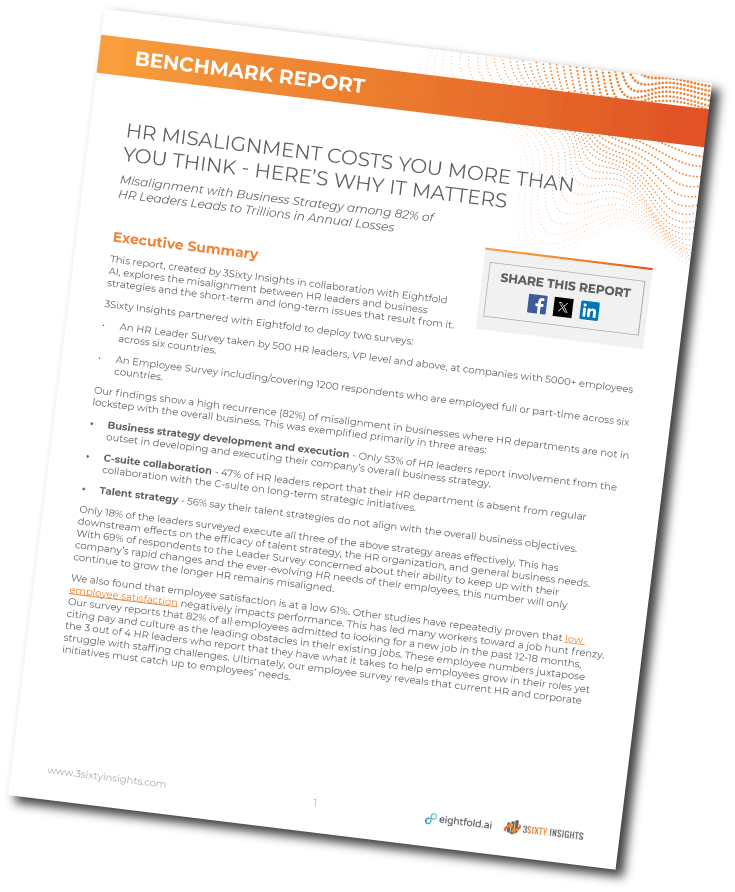
 Misalignment with Business Strategy among 82% of HR Leaders Leads to Trillions in Annual Losses
Executive Summary
This report, created by 3Sixty Insights in collaboration with Eightfold AI, explores the misalignment between HR leaders and business strategies and the short-term and long-term issues that result from it.
3Sixty Insights partnered with Eightfold to deploy two surveys:
- An HR Leader Survey taken by 500 HR leaders, VP level and above, at companies with 5000+ employees across six countries.
- An Employee Survey including/covering 1200 respondents who are employed full or part-time across six
Our findings show a high recurrence (82%) of misalignment in businesses where HR departments are not in lockstep with the overall business. This was exemplified primarily in three areas:
- Business strategy development and execution – Only 53% of HR leaders report involvement from the outset in developing and executing their company’s overall business strategy.
- C-suite collaboration – 47% of HR leaders report that their HR department is absent from regular collaboration with the C-suite on long-term strategic initiatives.
- Talent strategy – 56% say their talent strategies do not align with the overall business
Only 18% of the leaders surveyed execute all three of the above strategy areas effectively. This has downstream effects on the efficacy of talent strategy, the HR organization, and general business needs. With 69% of respondents to the Leader Survey concerned about their ability to keep up with their company’s rapid changes and the ever-evolving HR needs of their employees, this number will only continue to grow the longer HR remains misaligned.
We also found that employee satisfaction is at a low 61%. Other studies have repeatedly proven that low employee satisfaction negatively impacts performance. This has led many workers toward a job hunt frenzy. Our survey reports that 82% of all employees admitted to looking for a new job in the past 12-18 months, citing pay and culture as the leading obstacles in their existing jobs. These employee numbers juxtapose the 3 out of 4 HR leaders who report that they have what it takes to help employees grow in their roles yet struggle with staffing challenges. Ultimately, our employee survey reveals that current HR and corporate initiatives must catch up to employees’ needs.
While staffing remains a challenge, gaining a better understanding of skills is one tenable solution. HR leaders ranked understanding their workforce’s skills and capabilities as the second most important factor after retaining top performers, and our survey results indicate that gaining a better understanding of the skills makeup of their talent networks could be a method of doing so. With 96% of leaders surveyed saying they plan on using AI to help them solve these present and future problems, there’s light on the horizon to break these trends.
This report will outline how leaders can solve these problems by aligning HR goals with business goals and prioritizing understanding skills and capabilities to overcome internal and external staffing challenges. We will examine how those who encourage internal mobility, reskilling, redeployment, retention, and employee growth have higher employee satisfaction. The report also looks at the use of AI and technology in HR practices and the positive changes harnessing AI can bolster. This report shows how companies making strategic investments in technology enhance and transform their ability to meet future needs, achieve business goals, and streamline their tech stack.
Download the Full Benchmark Report: