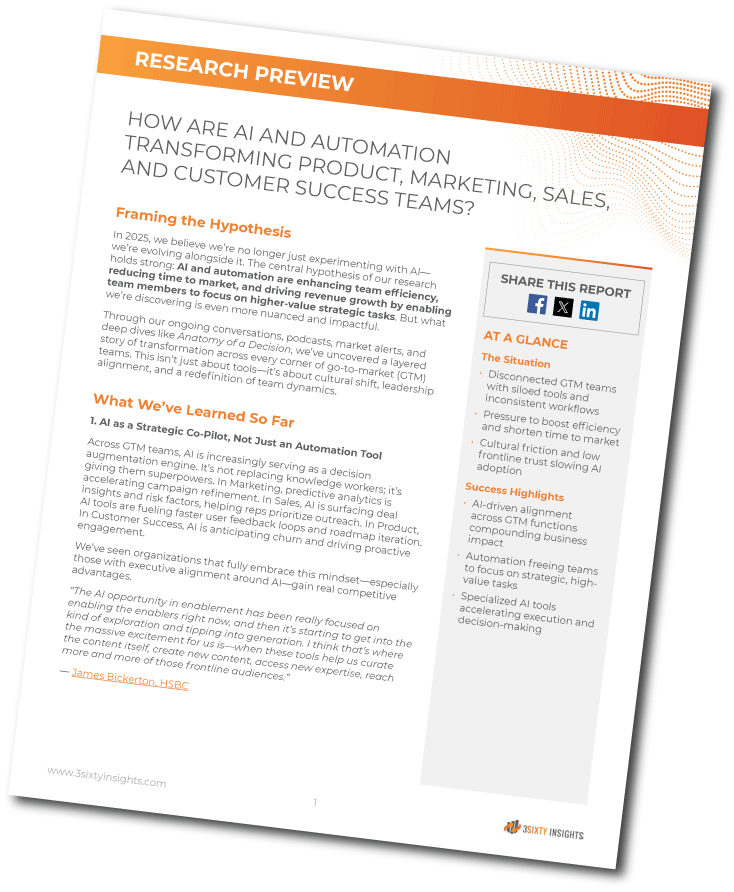
 Framing the Hypothesis
In 2025, we believe we’re no longer just experimenting with AI—we’re evolving alongside it. The central hypothesis of our research holds strong: AI and automation are enhancing team efficiency, reducing time to market, and driving revenue growth by enabling team members to focus on higher-value strategic tasks. But what we’re discovering is even more nuanced and impactful.
Through our ongoing conversations, podcasts, market alerts, and deep dives like Anatomy of a Decision, we’ve uncovered a layered story of transformation across every corner of go-to-market (GTM) teams. This isn’t just about tools—it’s about cultural shift, leadership alignment, and a redefinition of team dynamics.
What We’ve Learned So Far
1. AI as a Strategic Co-Pilot, Not Just an Automation Tool
Across GTM teams, AI is increasingly serving as a decision augmentation engine. It’s not replacing knowledge workers; it’s giving them superpowers. In Marketing, predictive analytics is accelerating campaign refinement. In Sales, AI is surfacing deal insights and risk factors, helping reps prioritize outreach. In Product, AI tools are fueling faster user feedback loops and roadmap iteration. In Customer Success, AI is anticipating churn and driving proactive engagement.
We’ve seen organizations that fully embrace this mindset—especially those with executive alignment around AI—gain real competitive advantages.
“The AI opportunity in enablement has been really focused on enabling the enablers right now, and then it’s starting to get into the kind of exploration and tipping into generation. I think that’s where the massive excitement for us is—when these tools help us curate the content itself, create new content, access new expertise, reach more and more of those frontline audiences.”
— James Bickerton, HSBC
Continue Reading the Full Research Preview: